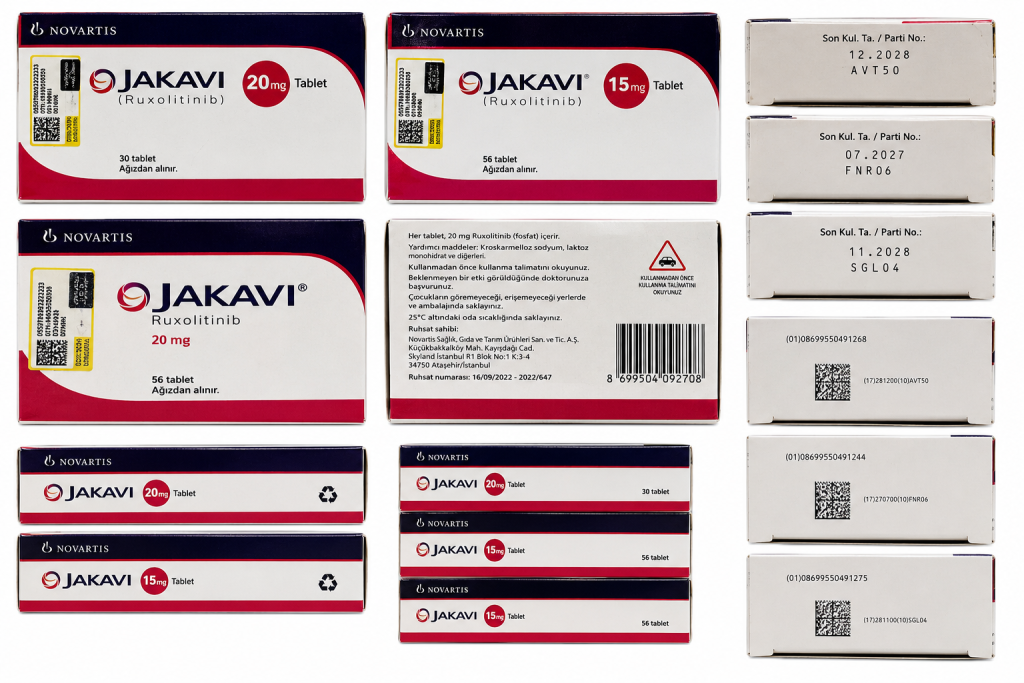
38. Rapid Alert – Falsified JAKAVI® (Ruxolitinib) Tablets

Rapid Alert

Falsified JAKAVI® (Ruxolitinib) Tablets Identified in the WHO Eastern Mediterranean and European Regions
DRAP Alert NoNo I/S/07-26-38
Action Date16 July, 2026
Target AudienceNational Regulatory Field Force of DRAP and Provincial Drug Control Departments.
Healthcare Professionals (Oncologists, Hematologists, Pharmacists & Nurses).
Hospitals and Oncology Treatment Centres.
General Public.
Problem StatementThe Drug Regulatory Authority of Pakistan (DRAP) has received WHO Medical Product Alert No. 2/2026 regarding falsified JAKAVI® (ruxolitinib) tablets identified in the WHO Eastern Mediterranean and European Regions. The falsified products were detected in the Islamic Republic of Iran, Türkiye, and the Russian Federation after being illicitly sold through online platforms and, in at least one instance, supplied through a pharmacy.
The genuine manufacturer, Novartis Pharma AG, has confirmed that the following batch numbers are not genuine. Any JAKAVI® product bearing these batch numbers should be considered falsified and should not be used.
Risk StatementJAKAVI® (ruxolitinib) is indicated for the treatment of myelofibrosis, polycythaemia vera, and graft-versus-host disease following stem cell transplantation.
The identified products are falsified medical products. Novartis has confirmed that the above-mentioned batch numbers are not valid. Laboratory analysis of a sample from batch AVT50 confirmed the absence of the declared active ingredient (ruxolitinib). Additionally, visual discrepancies were identified in the packaging, including the absence of batch numbers on blister strips of certain falsified batches.
Use of these falsified products may result in treatment failure, disease progression, increased morbidity, and potentially life-threatening outcomes. Patients receiving JAKAVI® often have compromised immune systems, making them particularly vulnerable to ineffective or falsified medicines.
Action InitiatedThe Regulatory Field Force of DRAP and Provincial Drug Control Departments has been directed to conduct surveillance activities throughout the supply chain to confiscate the falsified products.
Advice for Healthcare ProfessionalsDRAP requests healthcare professionals to have increased vigilance within the supply chains of institutions/pharmacies/healthcare facilities likely to be affected by above mentioned product. Any adverse events or quality problems experienced with the use of these products should be reported to  National or Provincial pharmacovigilance centers using Adverse Event Reporting Form or online through this link.  Further information on reporting problems to DRAP is available on this link.
Advice for ConsumersConsumers should not use these products and should contact their physician or healthcare provider(s) if they have experienced any problem related to taking or using the above mentioned products and should report the incident to the Drug Regulatory Authority of Pakistan / National Pharmacovigilance Centre. All therapeutic goods must be obtained from licensed pharmacies and other authorized/licensed retail outlets. The authenticity and condition of products should be carefully checked. Seek advice from your pharmacists or other healthcare professionals in case of any doubt.

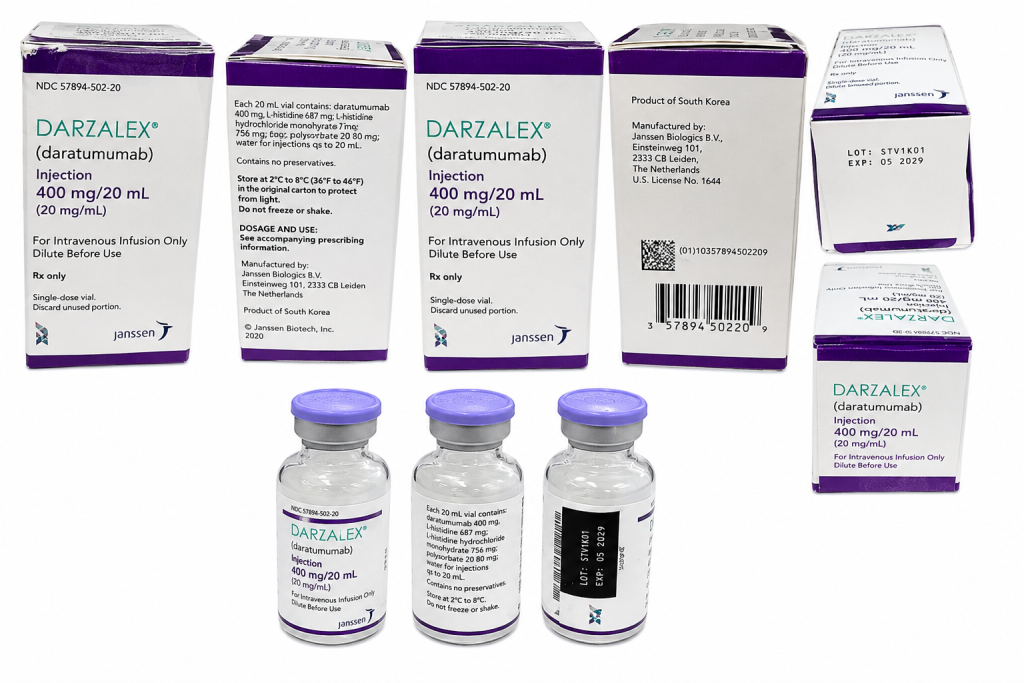
37. Rapid Alert – Falsified DARZALEX (Daratumumab) Injection

Rapid Alert

Falsified DARZALEX (Daratumumab) Injection Identified in WHO Regions of the Americas and South-East Asia
DRAP Alert NoNo I/S/07-26-37
Action Date16 July, 2026
Target AudienceNational Regulatory Field Force of DRAP and Provincial Drug Control Departments.
Healthcare Professionals (Oncologists, Hematologists, Pharmacists & Nurses).
Hospitals and Oncology Treatment Centres.
General Public.
Problem StatementThe Drug Regulatory Authority of Pakistan (DRAP) has received a Medical Product Alert No. 3/2026 issued by the World Health Organization (WHO) regarding falsified DARZALEX (Daratumumab) Injection identified in the WHO Regions of the Americas and South-East Asia. The falsified products were detected in Maldives and Mexico after being supplied through non-authorized distributors, with at least one report indicating supply to hospitals.
The genuine manufacturer, JANSSEN, has confirmed that the following batch numbers are not valid and any DARZALEX product bearing these batch numbers should be considered falsified.
Risk StatementDARZALEX (daratumumab) is a monoclonal antibody indicated for the treatment of multiple myeloma and amyloid light-chain (AL) amyloidosis.
No laboratory testing has been performed on the falsified products and their identity, composition, quality, and sterility remain unknown. These products may contain no active ingredient, incorrect ingredients, or harmful substances, making them ineffective or potentially dangerous.
WHO has also reported the presence of visible particulate matter in one falsified batch (STV1K01), indicating a potential risk of contamination. Use of these products may result in treatment failure, disease progression, infections, injection-related complications, increased morbidity, and potentially life-threatening outcomes.
Action InitiatedThe Regulatory Field Force of DRAP and Provincial Drug Control Departments has been directed to conduct surveillance activities throughout the supply chain to confiscate the falsified products.
Advice for Healthcare ProfessionalsDRAP requests healthcare professionals to have increased vigilance within the supply chains of institutions/pharmacies/healthcare facilities likely to be affected by above mentioned product. Any adverse events or quality problems experienced with the use of these products should be reported to  National or Provincial pharmacovigilance centers using Adverse Event Reporting Form or online through this link.  Further information on reporting problems to DRAP is available on this link.
Advice for ConsumersConsumers should not use these products and should contact their physician or healthcare provider(s) if they have experienced any problem related to taking or using the above mentioned products and should report the incident to the Drug Regulatory Authority of Pakistan / National Pharmacovigilance Centre. All therapeutic goods must be obtained from licensed pharmacies and other authorized/licensed retail outlets. The authenticity and condition of products should be carefully checked. Seek advice from your pharmacists or other healthcare professionals in case of any doubt.

36. Recall Alert – Medical Devices Declared Substandard by CDL Karachi

Recall Alert

MEDICAL DEVICES DECLARED SUBSTANDARD BY CENTRAL DRUG LABORATORY KARACHI  
DRAP Alert NoNo I/S/07-26-36
Action Date14 July, 2026
Target Audience– National Regulatory Field Force.
– Healthcare Professionals – Physicians, Pharmacists, and Nurses at hospitals and clinics
– General Public
Problem / Issue Central Drugs Laboratory (CDL), Karachi has informed that samples of the below-mentioned Medical Devices have been declared “Substandard”.

Therapeutic Goods (s) Affected: –

Risk Statement:The affected batches have been declared substandard due to failure of critical quality tests. The BD 10 mL Syringe (Batch No. 5349764) failed the Absorbance test, indicating excessive extractable substances that may compromise product safety and quality for parenteral use. The Accuject Auto-Disable Syringe 5 mL (Batch No. S502E26) failed the Sterility test, indicating possible microbial contamination that may increase the risk of infection, including serious systemic infections, upon use.
Action Initiated-The field force of DRAP and Provincial Drug Control Departments has been directed to immediately conduct market surveys for detection of presence and removal of the affected batches from the market. Manufacturers, importers and distributors have been directed to initiate recall of the affected batches in accordance with applicable regulatory requirements.
–Regulatory field force of all federating units (DRAP, Provincial Health Departments, and States) has also increased the surveillance in the market to ensure the effective recall of defective product(s).
Advice for Healthcare ProfessionalsDRAP requests increased vigilance within the supply chains of institutions/pharmacies/healthcare facilities likely to be affected by batches of mentioned products. Adverse reactions or quality problems experienced with the use of above mentioned batches of the drug product are to be reported to the National Pharmacovigilance Centre (NPC), DRAP using Adverse
Event Reporting Form or online through this link.  Further information of reporting problems to DRAP is available on this link.
Advice for Pharmacies/Medical stores: –All pharmacists and chemists working at distributions and pharmacies should immediately check their stocks and stop supplying the above-mentioned batches. The remaining stocks should be quarantined and returned to the supplier/company. Regulatory field force of all federating units should also increase surveillance in the market to ensure effective recall of the affected products.
Advice for ConsumersConsumers and healthcare facilities in possession of the affected batches should immediately stop using these products and contact the supplier, distributor or manufacturer for return or replacement. Any adverse event or quality issue associated with the use of these products should be reported to DRAP/National Pharmacovigilance Centre.

National Pharmacovigilance Cell (NPC), DRAP released a revised draft of Guidelines on National Pharmacovigilance System (Edition 05) seeking comments from stakeholders.

The Drug Regulatory Authority of Pakistan (DRAP) has established the National Pharmacovigilance Centre (NPC) under the Division of Pharmacy Services to oversee the safety monitoring of therapeutic goods across the country. The NPC works in close collaboration with national and international stakeholders to strengthen and sustain an effective pharmacovigilance system in Pakistan. Since 2018, Pakistan has been a full member of the World Health Organization Programme for International Drug Monitoring (WHO Programme for International Drug Monitoring), coordinated by the Uppsala Monitoring Centre (UMC), Sweden. At present, Pharmacovigilance Centres have been notified in all provinces, as well as within public health programmes, which contribute adverse event reports to the National Pharmacovigilance Database.

To facilitate timely reporting and effective safety surveillance, the NPC has developed a comprehensive, multi-channel reporting system for registration holders, hospitals, public health programmes, healthcare professionals, and the public. The Pharmacovigilance Rules, 2022 establish the legal framework governing pharmacovigilance activities in Pakistan and define the responsibilities of all stakeholders for maintaining pharmacovigilance systems and reporting safety data to the NPC.

Overall, these guidelines provide practical guidance to public sector stakeholders on the implementation of pharmacovigilance activities, covering the entire safety monitoring process from the identification and reporting of adverse events to signal detection, risk assessment, regulatory decision-making, and implementation of appropriate risk minimization measures. The guidelines have been comprehensively revised to reflect the evolving roles and responsibilities of stakeholders under the collaborative safety monitoring programme, align with current international best practices, and promote a coordinated, efficient, and transparent pharmacovigilance system. The revised guidance aims to clarify stakeholder responsibilities, eliminate duplication of efforts, strengthen collaboration among participating institutions, and enhance the quality and quantity of safety reporting across Pakistan.

The draft of revised guidelines is uploaded on the official website of DRAP on the 6th of July 2026 to seek comments and suggestions from stakeholders on the draft document. Stakeholders can submit their comments and suggestions within 15 days of uploading this document using the prescribed format. For further guidelines on submitting comments, visit the DRAP website or click here. Comments and suggestions can be forwarded via email to pv∂dra.gov.pk or can be posted at the mailing address, Director, Division of Pharmacy Services, Drug Regulatory Authority of Pakistan, Prime Minister’s National Health Complex, Park Road, Islamabad.